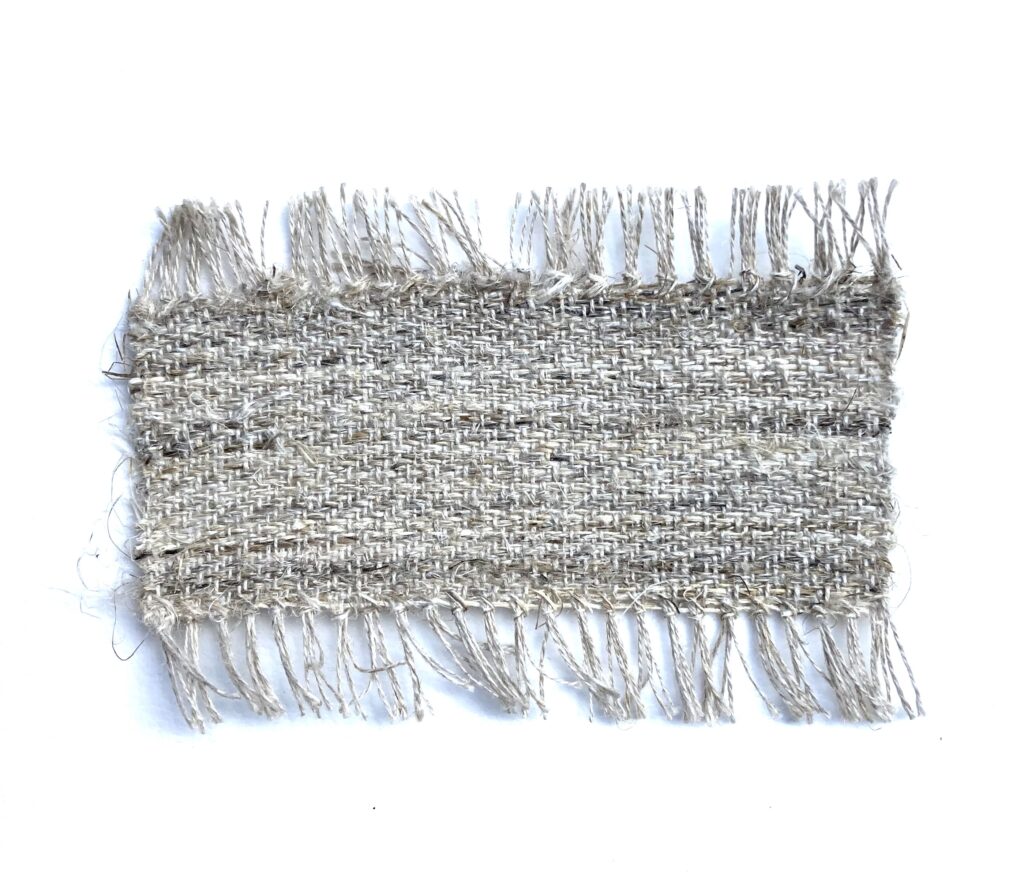
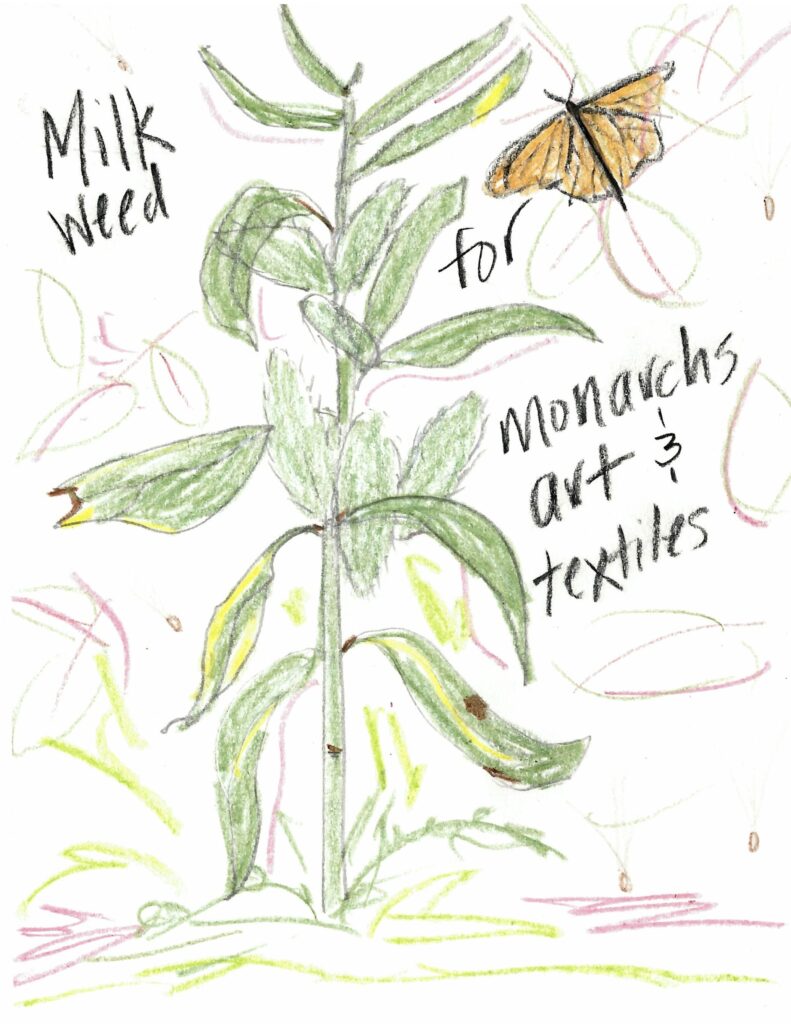
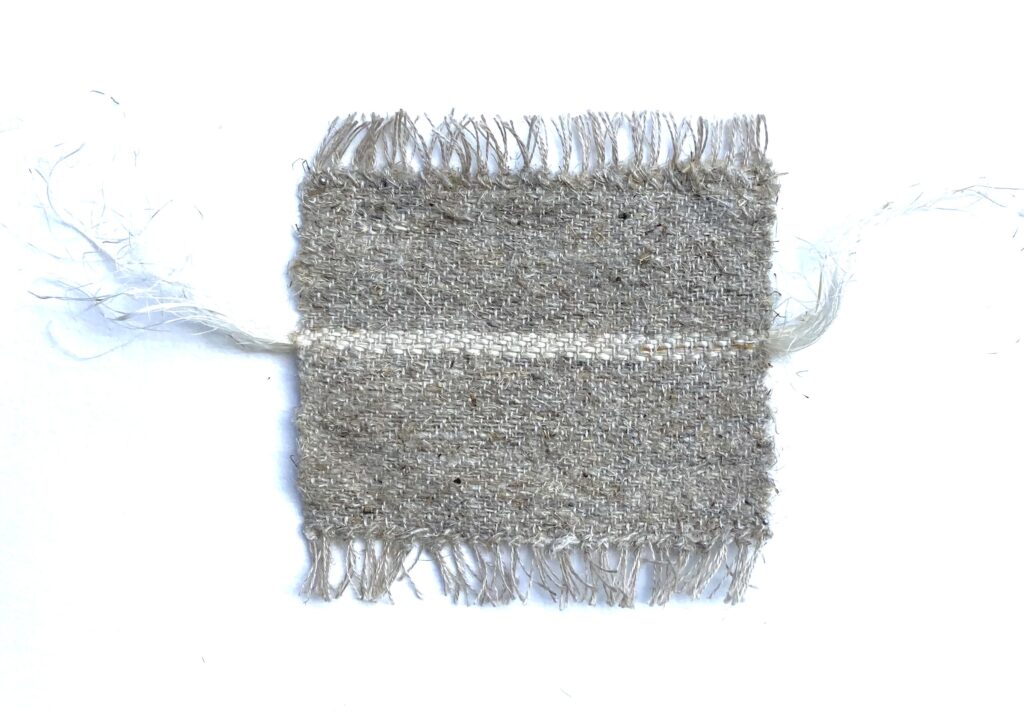
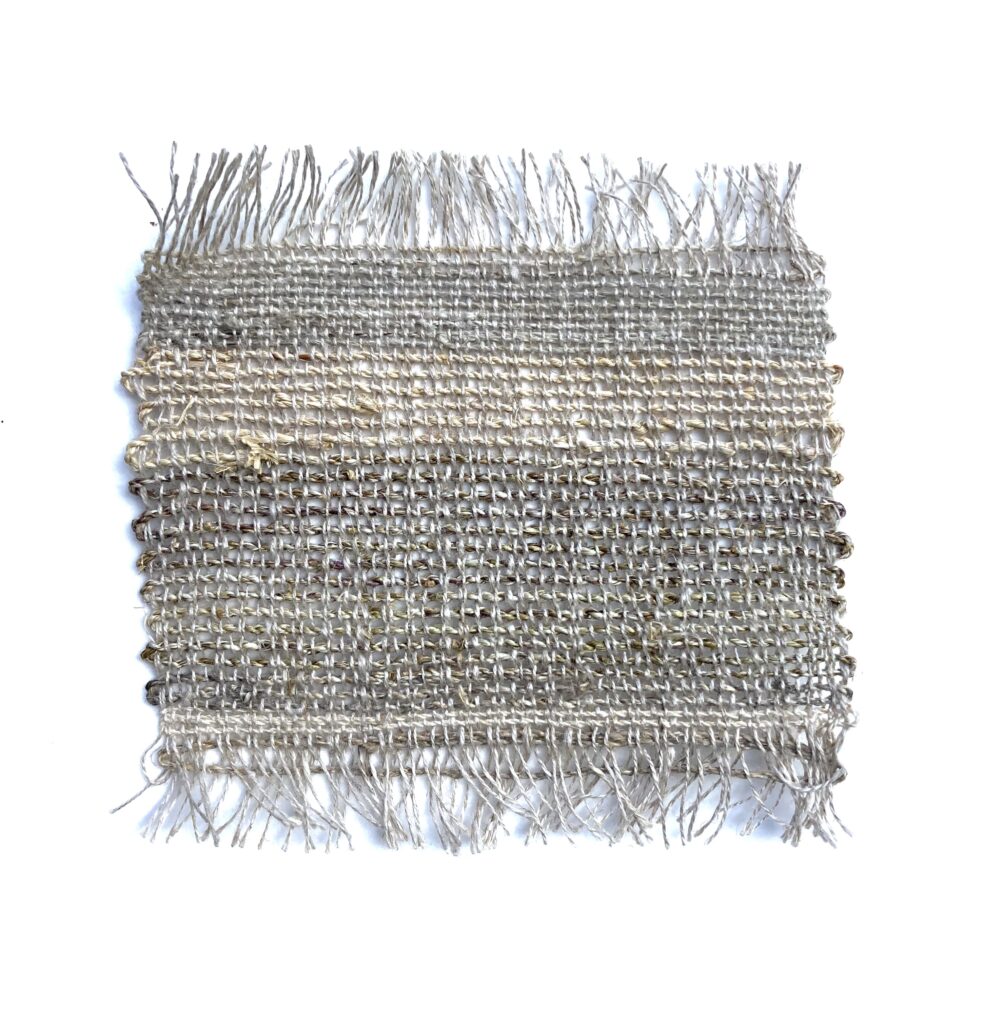
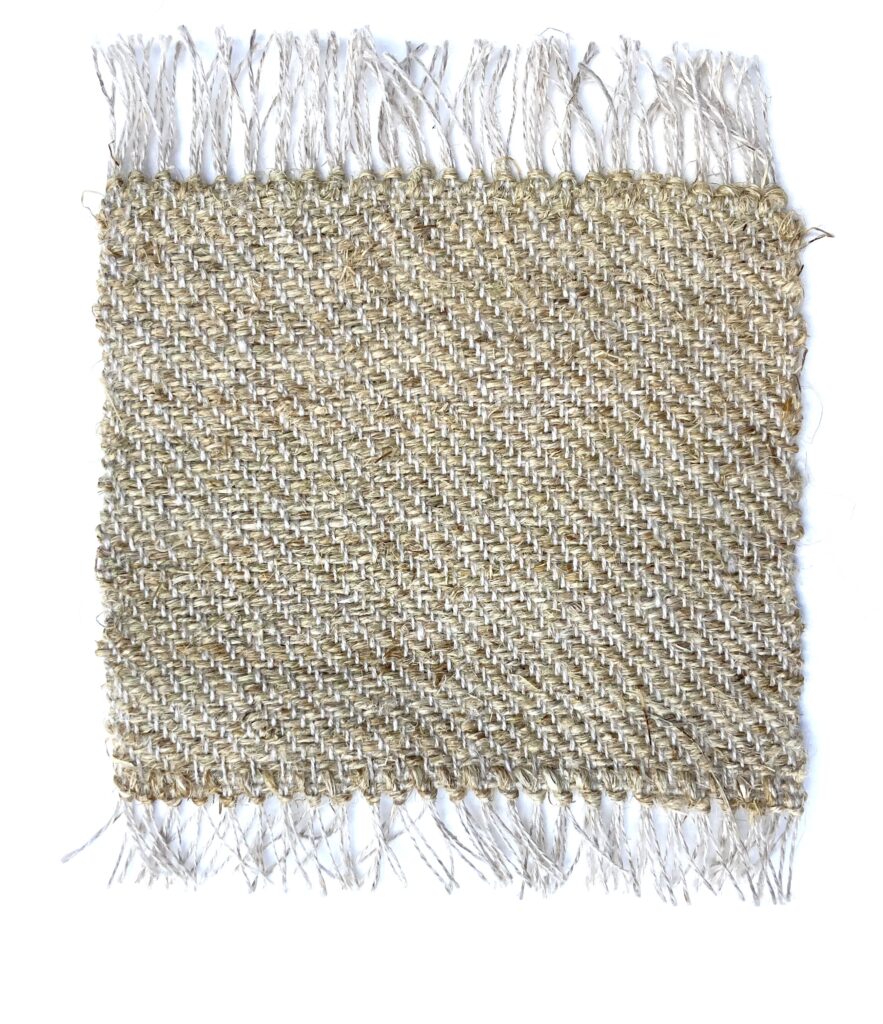
I am exploring using weeds to make textiles. In my work and life I am interested in being outside, wildness, and the non-human world. Extracting fibres from weeds feeds those desires. My favourites are stinging nettles and common milkweed. I admire the resistance of these weeds to commercial production.
These wild plants are free. They are vegetable. They are the stuff of fairy tales. They are local. They aren’t for sale and can’t be bought at a store. Together we are resisting (capitalism, fast fashion, shopping, rushing, waste, plastic).
My prototypes tell multitudes of stories. Little green shoots in the spring, plants taller than me in summer; harvesting nettles to make a savory pie; caterpillars, bite marks on leaves, frass, monarch butterflies; rain, sun, moon; leaves, stems, blossoms, seeds; my hands, my tools, slivers, dust, string, fabric.
My work making textiles from weeds is both practical and a daydream. I am practising spinning and weaving fibres to make cloth. I am dreaming of a vegetable silk coat (maybe one that will save my swan brothers). This work is very slow and the yields are very small. Prototypes of seed-to-cloth-to-soil – local, vegetable fabrics – highlight the cyclical possibilities of future waste-free clothing.